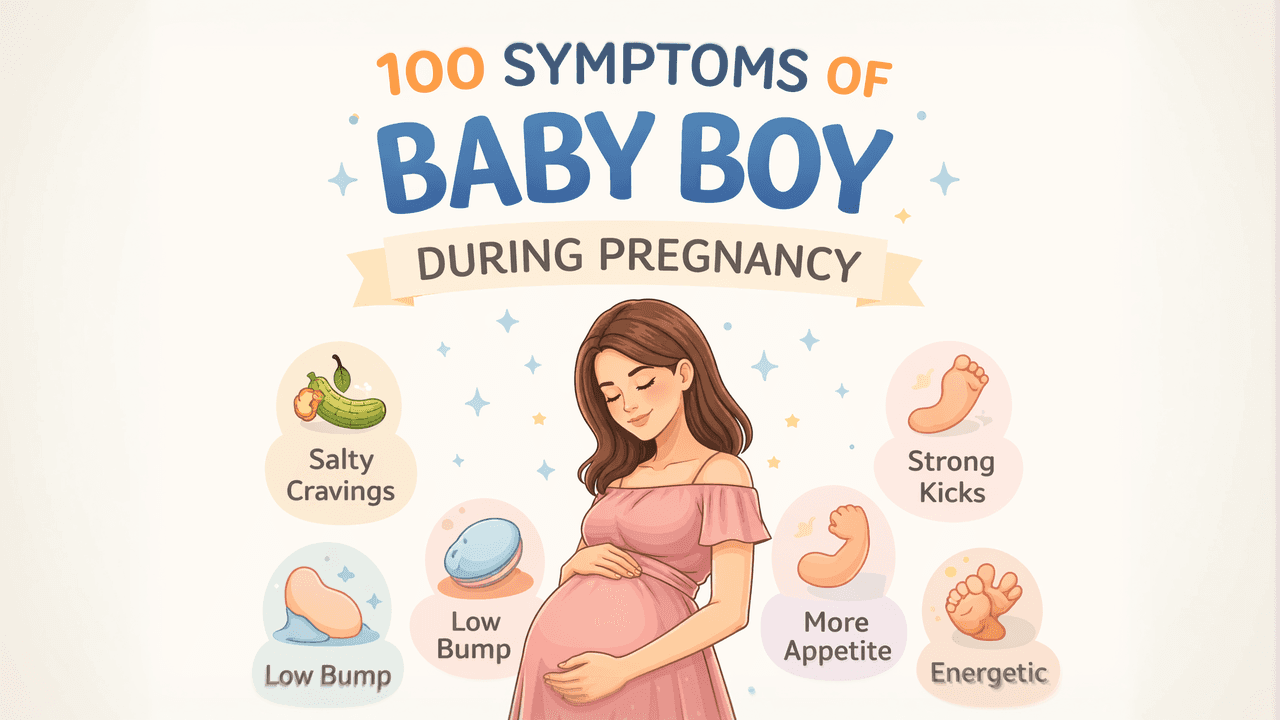
Pregnancy is an exciting journey, and one of the most common questions expecting parents ask is, "Am I having a baby boy or a baby girl?" Many people search for genuine symptoms of a baby boy hoping to find clues before the baby's birth.
The truth is that while there are many traditional beliefs and old wives' tales, there are no scientifically proven pregnancy symptoms that can accurately predict whether you're carrying a baby boy. Every pregnancy is unique, and symptoms vary from woman to woman.
In this article, we'll explore the most common beliefs, explain what science says, and help you separate facts from myths.
Commonly Believed Symptoms of a Baby Boy
Here is the simple comparison of the most common beliefs and what medical science actually says.
Commonly Believed Symptom | What People Believe | What Science Says |
|---|---|---|
Less Morning Sickness | Mild nausea means a baby boy. | Morning sickness varies due to hormones and individual pregnancy differences—not baby's gender. |
Low Baby Bump | Carrying low indicates a baby boy. | Belly position depends on body shape, muscle tone, and baby's position. |
Craving Salty or Spicy Foods | Salty cravings mean you're expecting a boy. | Cravings are influenced by hormonal changes and nutritional needs. |
Clear Skin During Pregnancy | Baby boys make the mother's skin glow. | Skin changes are caused by pregnancy hormones, regardless of gender. |
Baby's Heart Rate Below 140 BPM | A slower heartbeat indicates a baby boy. | Fetal heart rate is not a reliable indicator of gender. |
Pointed Belly Shape | A pointed bump means it's a boy. | Belly shape depends on the mother's body and baby's position. |
Cold Feet | Cold feet are believed to indicate a baby boy. | Usually related to circulation and body temperature, not fetal sex. |
Increased Appetite | Mothers carrying boys feel hungrier. | Appetite varies based on metabolism, hormones, and nutritional needs. |
Can Pregnancy Symptoms Tell You You're Having a Baby Boy?
The simple answer is No.
Symptoms like nausea, cravings, belly shape, or baby's heartbeat are influenced by hormonal changes, genetics, and your individual pregnancy—not by your baby's gender.
The only reliable ways to determine your baby's sex are medical tests such as:
Ultrasound (usually around 18–22 weeks)
Non-Invasive Prenatal Testing (NIPT)
Chorionic Villus Sampling (CVS)
Amniocentesis
What Science Actually Says?
There are no genuine pregnancy symptoms that can accurately confirm you're carrying a baby boy.
Pregnancy symptoms differ from one woman to another—even between different pregnancies of the same woman.
Factors like hormonal changes, genetics, overall health, nutrition, stress, and lifestyle have a much greater impact on pregnancy symptoms than the baby's gender.
Medical experts do not recommend relying on traditional signs to predict whether you're having a boy or a girl.
Medically Accurate Ways to Know Baby's Gender
Method | When It's Done | Accuracy |
|---|---|---|
Ultrasound Scan | 18–22 weeks | High accuracy when fetal position is clear. |
NIPT (Non-Invasive Prenatal Testing) | From 10 weeks | Highly accurate where legally and medically available. |
CVS & Amniocentesis | During pregnancy when medically indicated | Nearly 100% accurate but performed only for medical reasons. |
Important: In India, revealing the baby's sex before birth is illegal under the PCPNDT Act unless required for specific medical reasons.
Healthy Pregnancy Tips Instead of Looking for Genuine Symptoms of Baby Boy
Eat a balanced and nutritious diet.
Stay well-hydrated.
Take prenatal vitamins as prescribed.
Exercise safely after consulting your doctor.
Get enough sleep and rest.
Attend all prenatal check-ups.
Avoid smoking, alcohol, and self-medication.
Practice stress management through meditation or prenatal yoga.
Read Also:- Healthy Foods to Eat on Raksha Bandhan During Pregnancy
What You Should Remember?
While many traditional beliefs claim to predict a baby boy, there is no scientific evidence that pregnancy symptoms can determine your baby's gender. Every pregnancy is unique, and symptoms are influenced by hormones, genetics, and overall health—not whether you're carrying a boy or a girl.
Instead of relying on myths, focus on a healthy pregnancy with proper nutrition, regular prenatal check-ups, and your doctor's guidance. A healthy mother and baby are what truly matter.
Frequently Asked Questions (FAQs)
1. Can cravings tell if I'm having a boy?
No. Food cravings are related to hormonal and nutritional changes, not your baby's gender.
2. Can the baby's heartbeat reveal gender?
No. A baby's heart rate cannot accurately predict whether the baby is a boy or a girl.
3. Is less morning sickness a sign of a baby boy?
Not necessarily. Morning sickness varies from one pregnancy to another and is not a reliable indicator of the gender of the baby.
4. Are there any genuine symptoms of a baby boy?
No. There are no scientifically proven symptoms that can accurately predict a baby boy during pregnancy.