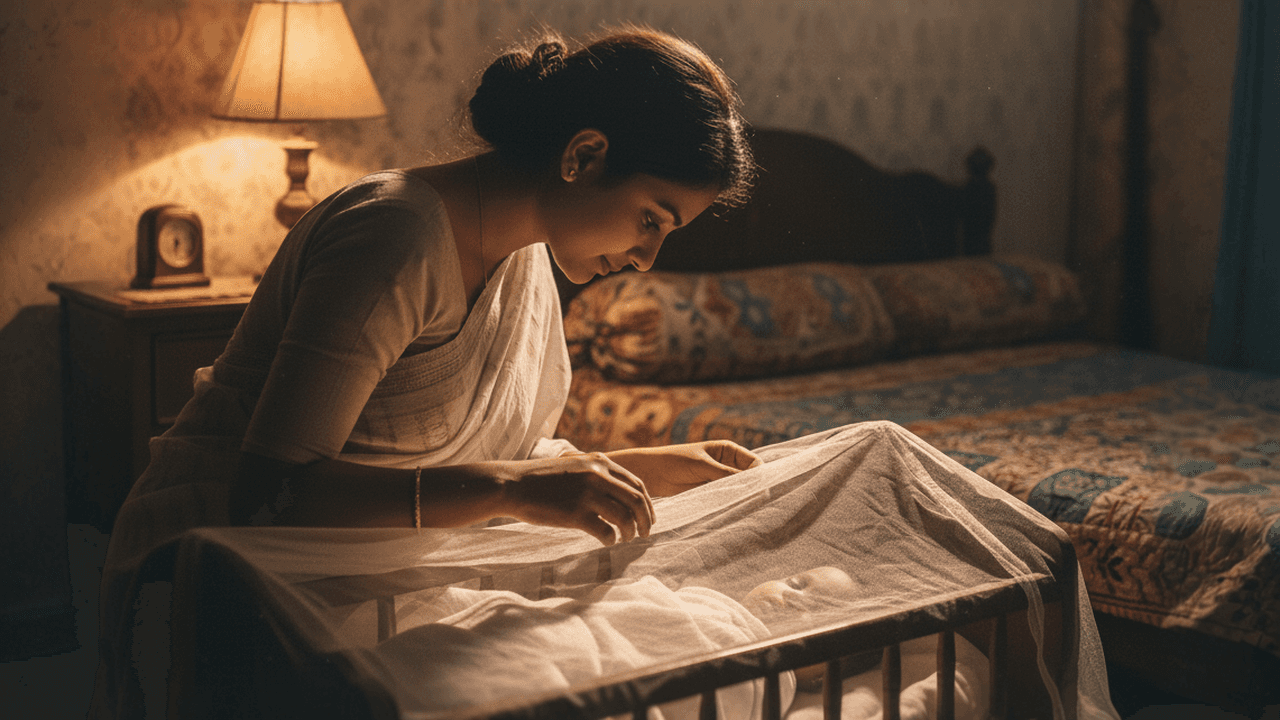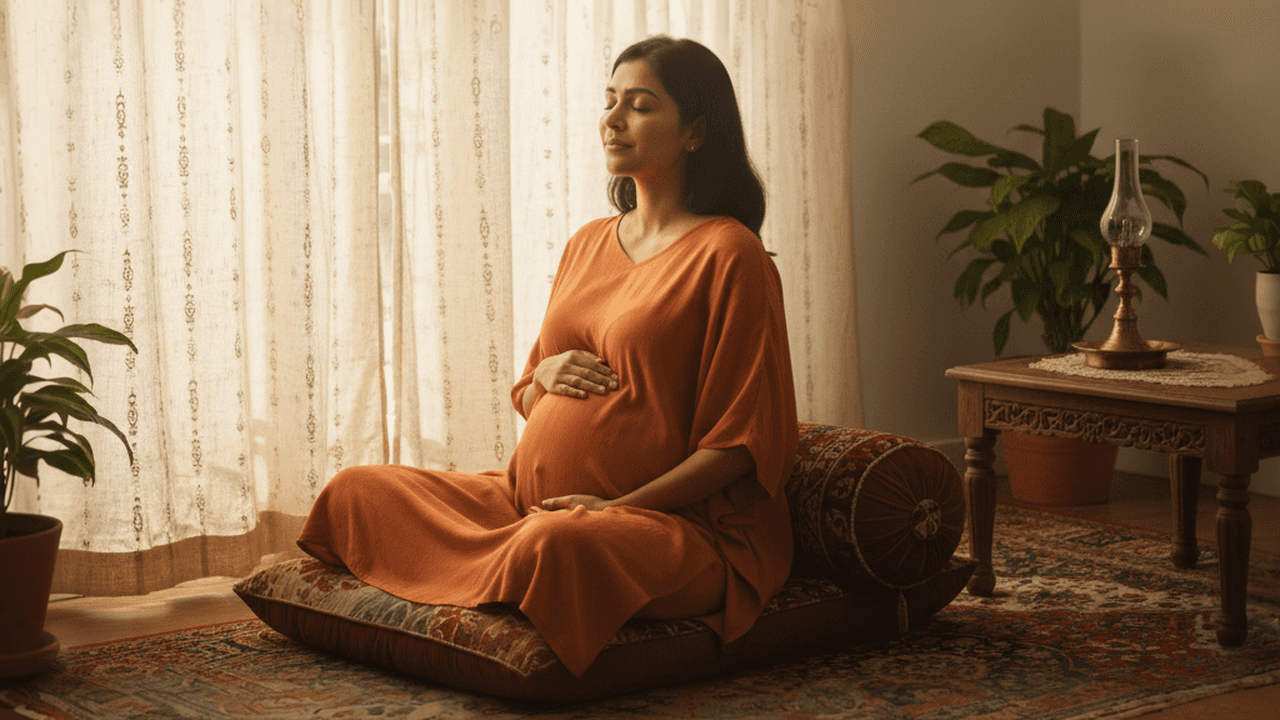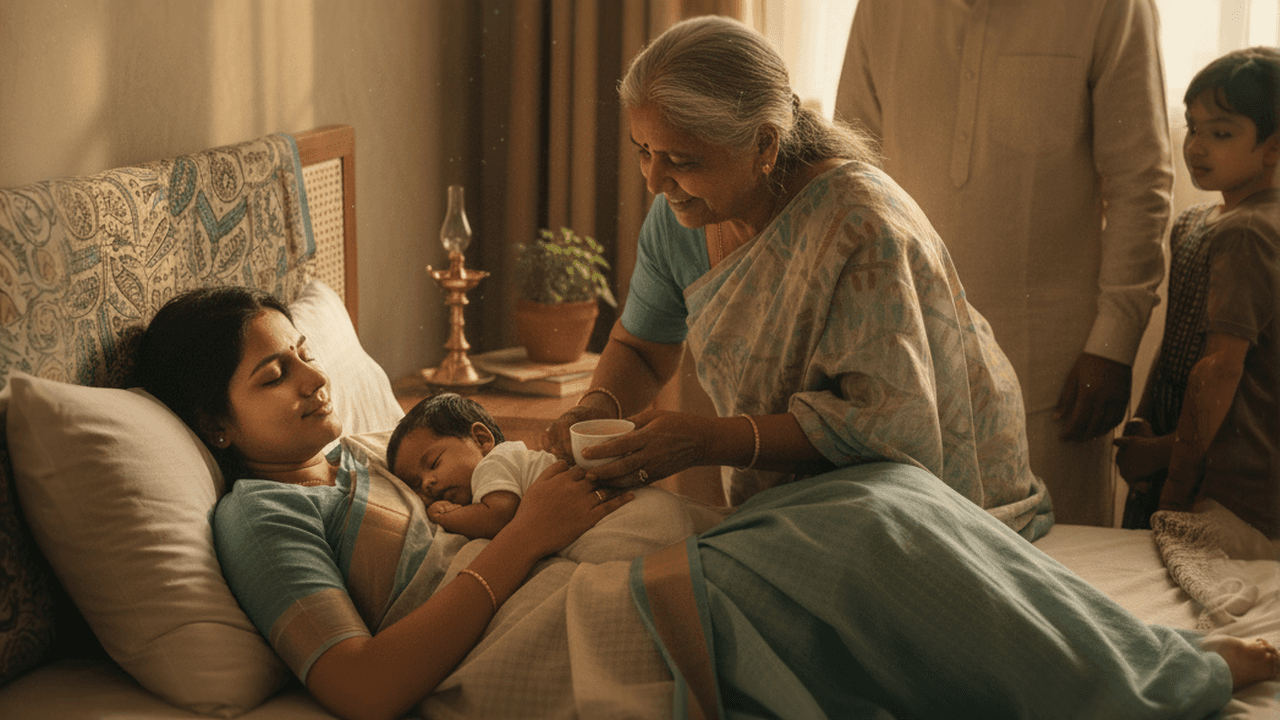
The first forty days following childbirth were considered sacred for post pregnancy care in many cultures, but particularly in India. It was suggested that a new mother avoid physical strain, eat right, keep the body warm, and take it easy. This tradition was created to protect women in a period when childbirth was more dangerous and access to healthcare was limited. It ensures a mother is not left to heal herself.
Biologically, this time frame aligns with how the body recovers:
The uterus slowly returns to its normal size
Vaginal or C-section stitches begin to heal
Hormones fluctuate heavily
Breastfeeding patterns are established
The body regains basic strength after labor
This period is not only physical, but it is deeply emotional as well. A woman doesn’t just give birth to a baby; she is also reborn as a mother.
Emotional Healing Is as Important as Physical Rest
After delivery, emotions can change rapidly. Many mothers experience:
Mood swings
Anxiety
Baby blues
Feelings of exhaustion and self-doubt
True rest allows space for emotional adjustment. When a new mother feels supported, protected, and allowed to slow down, her mental health stays stronger. The original concept of 40 days of rest was never about isolation; it was about care, safety, and love.
Medical Truth: How Much Sleep Is Really Necessary for a Mother Nowadays?Modern medicine doesn't necessitate bed rest for exactly 40 days. On the contrary, a well-rounded period of recuperation for four to six weeks after a normal delivery and for six to eight weeks after a C-section is what doctors recommend. This includes adequate rest, gentle exercise, and proper attention to warning signs.
Your body needs time to prevent:
Heavy bleeding
Delayed wound healing
Pelvic floor weakness
Severe fatigue
Long-term back and joint pain
At the same time, complete immobility is not advised. Gentle movement, like short indoor walks, improves blood circulation and speeds up healing.
Breastfeeding, Nutrition, and Energy Restoration
Breastfeeding and newborn care demand enormous energy. Without enough rest and nutrition, many mothers face:
Low milk supply
Weak immunity
Hair fall and body weakness
Constant exhaustion
Rest allows your body to rebuild itself. Nutritious food, hydration, and uninterrupted sleep whenever possible are the true pillars of postpartum recovery.
Is a Strict 40-Day Rest Mandatory for All Mothers?
The honest answer is no, not in a rigid way. Every woman’s recovery depends on:
Type of delivery
Birth complications
Physical strength
Emotional well-being
Family support system
Some women feel stable in 3–4 weeks; others need more time. Both are normal. What matters is listening to your body without guilt.
You should never rush recovery due to:
Social pressure
Household expectations
Comparison with other mothers
Rest is not just a luxury but a right.
If You Can’t Take the Full 40 Days of Rest, What Can You Do?
Many mothers today don’t have the option of complete confinement. If that’s your reality, focus on small protective steps:
Ask for help with daily chores
Sleep whenever the baby sleeps
Avoid heavy lifting and long travel
Eat nourishing, simple meals
Limit visitors and emotional overload
Seek medical help if pain, bleeding, or sadness feels overwhelming
Even partial rest, when done consistently, protects your long-term health.
Conclusion: Your Recovery After Delivery Deserves Patience, Not PressureYou may not need to follow a strict 40-day confinement, but your body absolutely needs rest, nourishment, emotional safety, and time. The tradition exists not to restrict you but to remind the world that a mother’s recovery matters. Whether your healing takes three weeks or two months, there is no deadline on your strength. Recovery after childbirth is not a race but a deeply personal journey. And you deserve to move through it slowly, gently, and without guilt.
Sources
ACOG – Optimizing Postpartum Care
ACOG – What to Expect at a Postpartum Checkup, and Why the Visit Matters