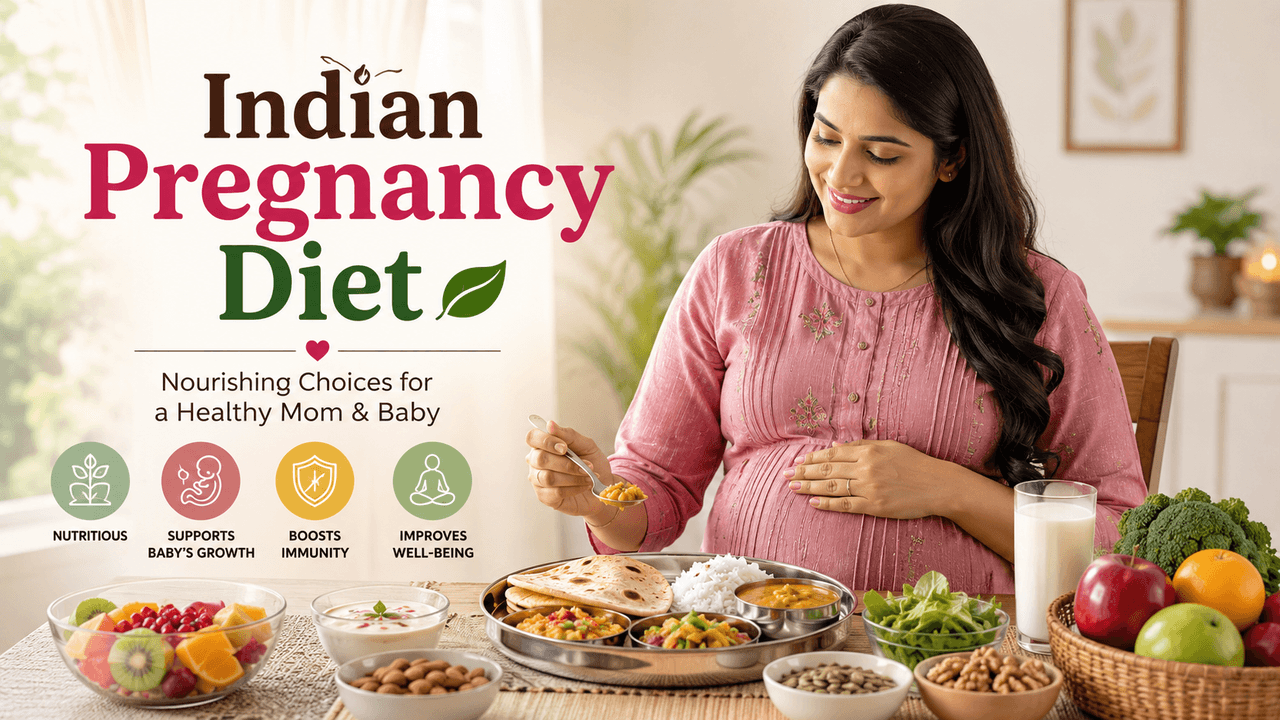
you've just found out you're pregnant, and suddenly every aunty, neighbour, and well-meaning relative has an opinion about what you should eat. Ghee or no ghee? Can you have papaya? Is rice too heavy? It can feel overwhelming — and a little exhausting. The good news is that a healthy Indian pregnancy diet chart doesn't have to be complicated or expensive. With a little guidance, you can nourish yourself and your growing baby beautifully, using the wholesome foods already found in most Indian kitchens.
Whether you're in your first trimester feeling too nauseous to look at food, or in your third trimester trying to fit five small meals into a very compressed stomach, this guide is written for you — practically, warmly, and without judgment.
Key Takeaways for Indian Pregnancy Diet
Pregnancy nutrition is about eating smarter, not drastically more — most women need roughly 300–500 extra calories per day depending on the trimester.
Iron, folic acid, calcium, and protein are the four nutrients Indian mothers most commonly need to pay close attention to.
Traditional Indian foods like dal, roti, curd, eggs, leafy greens, and seasonal fruits can meet most nutritional needs beautifully.
A good Indian pregnancy diet chart changes trimester by trimester — what your body needs at 8 weeks is different from what it needs at 32 weeks.
Certain foods — raw papaya, undercooked meat, very high mercury fish, and excess caffeine — are best avoided during pregnancy.
Always work with your doctor or a registered dietitian to personalise your diet plan.
Why Your Diet Matters More Than Ever Right Now
Your body is doing something extraordinary. Every single day of your pregnancy, it is building bones, developing a brain, forming tiny fingers, and laying the foundation for a whole new life. Food is the fuel that makes all of this possible. A balanced Indian pregnancy diet can help support healthy foetal development, maintain your own energy and wellbeing, and prepare your body for the demands of labour and recovery.
That said, no diet is "perfect," and pregnancy is not a time for rigid rules or anxiety around food. The aim is simply to eat a variety of nourishing foods, stay well-hydrated, and listen to your body.
Nutrients That Deserve Extra Attention
Research consistently shows that pregnant women in India are at higher risk of certain nutritional deficiencies — particularly iron, folic acid, calcium, and Vitamin D. Understanding where these come from can help you make small, meaningful changes to your daily meals.
Iron
Iron needs increase significantly during pregnancy to support the expanded blood supply and the baby's own iron stores. The recommended intake is around 27 mg per day. Good Indian sources include green leafy vegetables like palak and methi, rajma, chana, lentils, jaggery, and ragi. Pairing iron-rich foods with a source of Vitamin C — like a squeeze of lemon over your dal or a small glass of amla juice — may help your body absorb iron more effectively.
Folic Acid
Folic acid is especially critical in the first trimester, when the baby's neural tube is forming. Most doctors recommend a folic acid supplement before conception and through at least the first 12 weeks. Food sources include moong dal, green leafy vegetables, besan, and fortified cereals. An Indian pregnancy diet chart for the first trimester will almost always prioritise folate-rich foods alongside a prescribed supplement.
Calcium
Your baby's bones and teeth are developing throughout pregnancy, and if your diet doesn't provide enough calcium, your body may draw it from your own bones. Aim for around 1,000 mg per day. Dairy — dahi, paneer, milk — is the most accessible source for most Indian families. For those who are lactose intolerant or vegan, ragi (finger millet) is an excellent plant-based option, along with sesame seeds (til) and fortified plant milks.
Protein
Protein supports the growth of foetal tissue, including the brain, and helps with changes in your own body like breast and uterine growth. Good sources in Indian diets include dal, paneer, curd, eggs, chicken, fish, rajma, and soya. A modest increase in protein intake across pregnancy is generally recommended — your doctor can advise on amounts specific to your body weight.
Vitamin D and DHA
Vitamin D supports calcium absorption and immune health, while DHA (an omega-3 fatty acid) plays a role in brain and eye development. Sunlight exposure, fatty fish like rohu or mackerel, and eggs are helpful dietary sources. Many doctors recommend supplements for these during pregnancy — please follow your doctor's prescription rather than self-supplementing.
A Trimester-by-Trimester Indian Pregnancy Diet Chart
Your nutritional needs shift as your pregnancy progresses. Here is a general overview of how your Indian pregnancy diet chart might look across the three trimesters.
Trimester | Key Focus | Helpful Indian Foods |
|---|---|---|
First Trimester (Weeks 1–12) | Folic acid, managing nausea, light frequent meals | Moong dal khichdi, coconut water, plain curd, banana, lemon water, poha, toast with peanut butter |
Second Trimester (Weeks 13–26) | Iron, calcium, protein, ~340 extra calories/day | Palak paneer, rajma, ragi rotla, dahi, eggs, seasonal fruits, sprouts, roasted chana |
Third Trimester (Weeks 27–40) | Smaller frequent meals, continued iron and protein, DHA | Fish curry (low mercury), dal, whole grain roti, warm milk with turmeric (haldi doodh), dry fruits in moderation |
Throughout Pregnancy | Hydration, fibre for constipation, avoiding food-unsafe items | Plenty of water, buttermilk (chaas), whole grains, seasonal sabzi, fresh fruit |
A Sample Day of Eating — Indian Pregnancy Diet
Here is a gentle example of how a balanced day might look for a pregnant mother in the second trimester. This is a general idea, not a prescription — your appetite, preferences, and health conditions will shape what works best for you.
Early morning: A small glass of warm milk or a soaked handful of almonds and walnuts. If nausea is present, plain crackers or a banana may feel easier.
Breakfast: Upma with vegetables, or two eggs with whole wheat toast, or poha with peanuts and a small cup of curd.
Mid-morning snack: Fresh seasonal fruit, a small bowl of sprouts chaat, or a glass of buttermilk.
Lunch: Two whole wheat rotis or a cup of rice, a bowl of dal, one sabzi (preferably green leafy), curd, and a small salad with lemon dressing.
Evening snack: A small bowl of roasted chana, a handful of dry fruits, or a warm cup of haldi doodh.
Dinner: Khichdi with ghee, or roti with dal and a light vegetable, followed by a small bowl of dahi if digestion allows.
Choosing the right foods is important, but knowing the foods to avoid during pregnancy can also help reduce unnecessary health risks.
What to Limit or Avoid
A few foods are generally best avoided or limited during pregnancy. This isn't about fear — it's about being thoughtful with choices during a period when your body is more vulnerable to certain foodborne bacteria and when some compounds may affect pregnancy.
Raw or unripe papaya contains compounds that may stimulate uterine contractions, so most doctors advise avoiding it during pregnancy. Fully ripe papaya in small amounts is usually considered safe, but it's always worth checking with your doctor. High-mercury fish like shark, swordfish, and king mackerel are best avoided — opting for lower-mercury fish like rohu, catla, and mackerel in moderation is a better choice. Excess caffeine is generally limited to under 200 mg per day (roughly one small cup of coffee). Unpasteurised dairy, raw or undercooked meat, and unwashed produce can carry bacteria that pose risks in pregnancy, so food hygiene matters a great deal. Street food isn't off-limits, but choosing freshly prepared, hot food from trusted sources is wise.
Navigating Family Advice and Traditional Practices
In most Indian families, pregnancy is a shared experience — and that means a lot of well-intentioned advice from mothers, mothers-in-law, and elders. Some traditional practices, like eating warm and easily digestible foods, resting after meals, or drinking warm milk with herbs like saffron, are gentle wellness traditions that many mothers find comforting. These can coexist with modern medical guidance.
Where traditional advice conflicts with what your doctor has recommended — for instance, if an elder insists on a food your doctor has specifically asked you to avoid — it's perfectly respectful to gently say, "My doctor has given me some specific guidance for my situation." Most family members want what is best for you and your baby, and framing it this way honours both relationships.
Staying Hydrated
Hydration is a quiet but essential part of any Indian pregnancy diet plan. Water supports the increased blood volume during pregnancy, helps form amniotic fluid, reduces constipation, and supports kidney function. Most pregnant women can aim for 8–10 glasses of water or fluids daily, including nourishing options like coconut water, chaas, nimbu pani (without too much salt), and thin dal. If you notice signs of dehydration — dark urine, dizziness, or dry mouth — increase your fluid intake and speak with your doctor if symptoms persist.
When to Seek Medical Advice Right Away
While most pregnancy nutrition questions can be discussed at your regular antenatal appointment, certain symptoms need prompt medical attention. Please seek immediate medical care if you experience heavy bleeding, severe abdominal pain, a significant decrease or complete absence of foetal movement after 28 weeks, seizures, high fever, difficulty breathing, or severe vomiting that prevents you from keeping any food or fluids down (a condition called hyperemesis gravidarum). These are not situations to manage at home or with dietary changes alone.
Frequently Asked Questions
Q: Is it safe to eat rice every day during pregnancy?
A: Yes, rice is a staple for good reason — it is easily digestible, provides energy, and sits well even during nausea. Opting for hand-pounded or parboiled rice over highly polished white rice can offer slightly more nutrients. Pairing rice with dal, vegetables, and curd makes it a well-rounded, nourishing meal. There is no need to avoid rice unless your doctor has specific guidance related to blood sugar management.
Q: Can I follow a vegetarian or vegan Indian pregnancy diet?
A: Many Indian mothers follow a vegetarian pregnancy diet very successfully. The key is ensuring you are getting enough protein (dal, paneer, curd, soya, legumes), iron (leafy greens, jaggery, ragi), calcium (dairy, til, ragi), and Vitamin B12 (dairy, or a supplement if vegan). A vegan pregnancy diet requires more careful planning and supplementation — please work closely with your doctor or a registered dietitian to ensure all your needs are met.
Q: How many extra calories do I actually need during pregnancy?
A: The "eating for two" idea is a bit of a myth. In the first trimester, most women don't need many additional calories at all. In the second trimester, roughly 340 extra calories per day is a general guideline, and in the third trimester around 450–500 extra calories. These are approximations — your actual needs depend on your pre-pregnancy weight, activity level, and your doctor's advice.
Q: Is it safe to eat dry fruits and nuts during pregnancy?
A: Yes, nuts and dry fruits can be a wonderful addition to your Indian pregnancy diet. Almonds provide calcium and Vitamin E, walnuts are a good plant-based source of omega-3 fats, and dates (khajoor) provide iron and natural energy. Moderation is key — a small handful daily is generally considered a healthy snack. If you have gestational diabetes or concerns about blood sugar, speak with your doctor about quantities.
Q: My morning sickness makes it hard to eat — what can I do?
A: Morning sickness (which, as many mothers know, can strike at any hour!) is one of the most common challenges of early pregnancy. Eating small, frequent meals rather than large ones often helps. Cold or room-temperature foods may be easier to tolerate than hot, strongly scented dishes. Plain foods like toast, crackers, idli, or plain rice with curd can be gentle starting points. Staying hydrated between meals matters too. If your nausea is severe and you cannot keep food or fluids down, please speak with your doctor — effective support is available.
Growing a baby is one of the most remarkable things a human body can do, and you are already doing it. Your Indian pregnancy diet doesn't have to be flawless — it just has to be nourishing, balanced, and sustainable for your real life. There will be days when all you can manage is plain dal chawal, and days when you eat beautifully and feel strong. Both are okay. Trust yourself, stay connected with your doctor, lean on the people who love you, and know that the effort you are putting in right now — even on the hard days — truly matters. You are doing a wonderful job.