You wake up one morning feeling a little off - maybe a wave of nausea before breakfast, or a tiredness that no amount of sleep seems to fix. Something feels different, but you can't quite name it yet. For many Indian mothers, these quiet, confusing early days are where the pregnancy journey truly begins - long before a test confirms it, long before anyone else knows.
If you've been searching for early pregnancy symptoms in Hindi contexts or simply want to understand what your body is going through week by week, you're in the right place. This guide walks you through every stage - from those first subtle signs to the moments your body begins preparing for birth - in warm, honest, simple language.
Pregnancy Symptoms Week by Week : Key Takeaways
Pregnancy is counted from the first day of your last menstrual period (LMP), making it approximately 40 weeks total.
Early symptoms like fatigue, nausea, and breast tenderness are common in the first trimester and often ease by week 12-14.
Every pregnancy is different - comparing your experience to someone else's is rarely helpful or accurate.
Most symptoms, while uncomfortable, are signs of a healthy pregnancy progressing as it should.
Knowing which symptoms need immediate medical attention can help you stay calm and prepared.
The third trimester brings its own set of changes as your body begins the slow, beautiful work of preparing for labour.
Many women experience symptoms such as nausea, fatigue, and morning sickness during pregnancy during the early weeks after conception.
How Pregnancy Weeks Are Counted?
Before diving into symptoms, a small but important detail: pregnancy is typically counted from the first day of your last menstrual period, not from conception. This means the first two weeks of your "pregnancy" are actually before the egg is fertilised. Most full-term pregnancies last around 40 weeks, divided into three trimesters.
Understanding this helps make sense of why your doctor might say you're "6 weeks pregnant" when you've only just confirmed it - and why those early weeks can feel so disorienting.
The First Trimester: Weeks 1-12
Weeks 1-4: Before You Even Know
In these very early weeks, the fertilised egg travels to the uterus and implants itself into the uterine lining. Many women don't yet know they're pregnant, but the body is already changing. Some may notice light spotting (called implantation bleeding) around weeks 3-4, which can be mistaken for a very light period. Mild cramping, bloating, and a general feeling of "something's different" are also common.
For many Indian mothers searching for early pregnancy symptoms in Hindi or English, breast tenderness and a heightened sense of smell are among the first things noticed - sometimes even before a missed period.
Weeks 5-8: The Symptoms Arrive
This is when pregnancy symptoms often become unmistakable. Morning sickness - which, despite its name, can strike at any hour - affects a large number of pregnant women. Nausea with or without vomiting, extreme fatigue, frequent urination, food aversions, and mood changes are all very common during this period.
Hormones, particularly hCG (human chorionic gonadotropin), are rising rapidly. Your body is working incredibly hard, even if you can't see it yet. Many mothers describe this stage as feeling exhausted for no visible reason - and that exhaustion is completely valid and real.
Weeks 9-12: The Hormonal Peak
Nausea and fatigue often reach their peak around weeks 8-10 before gradually easing. By week 12, many mothers begin to feel slightly more like themselves. Other symptoms during this phase may include heartburn, constipation, headaches, increased saliva, and dizziness. The uterus is expanding, and while a baby bump isn't visible yet for most, some bloating may make clothes feel tighter.
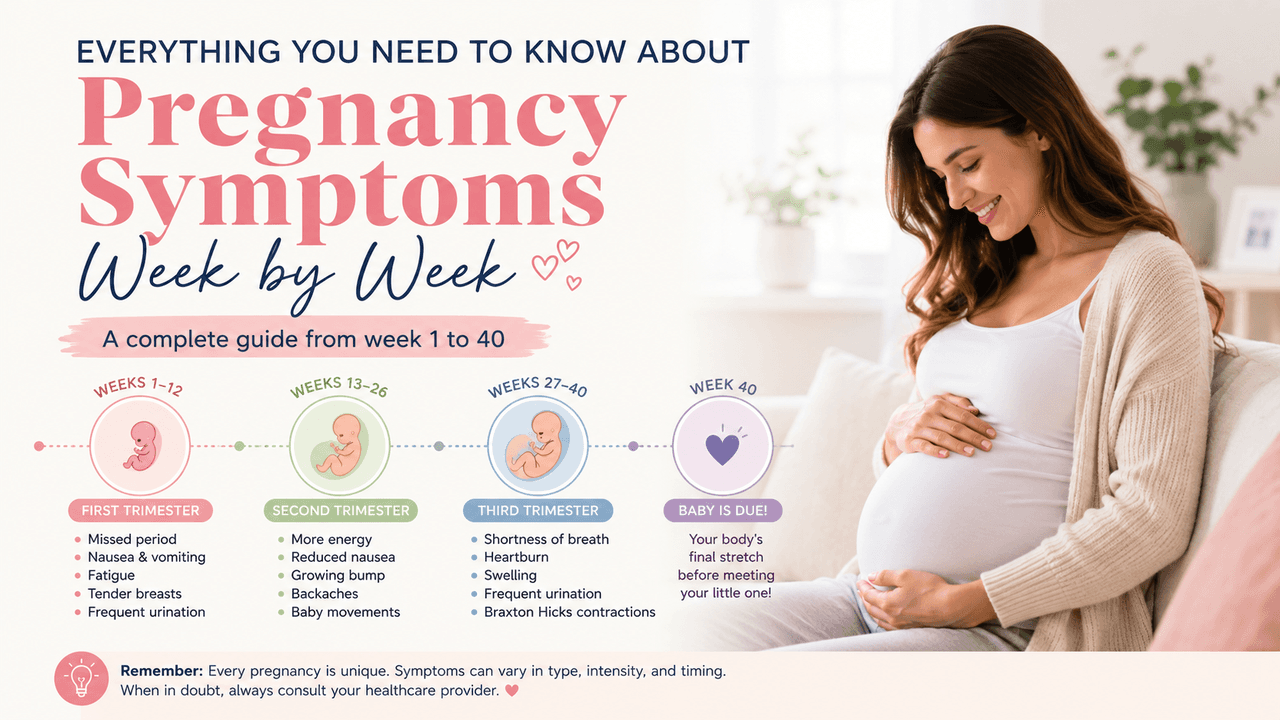
Trimester | Common Symptoms | What's Happening Inside |
First Trimester (Weeks 1-12) | Nausea, fatigue, breast tenderness, frequent urination, food aversions, mood changes | Fertilisation, implantation, rapid cell division, major organ formation begins |
Second Trimester (Weeks 13-26) | Growing belly, back pain, leg cramps, skin changes, baby movements felt | Baby grows rapidly, organs mature, movements begin around 18-22 weeks |
Third Trimester (Weeks 27-40) | Braxton Hicks contractions, shortness of breath, pelvic pressure, swelling, trouble sleeping | Baby gains weight and turns head-down, lungs mature, body prepares for labour |
Final Weeks (Weeks 37-40) | Increased pelvic pressure, cervical changes, nesting instinct, loss of mucus plug | Baby reaches full term, drops lower into pelvis, cervix begins to soften and efface |
The Second Trimester: Weeks 13-26
Weeks 13-16: The "Relief" Phase
For most mothers, the second trimester brings a welcome shift. Nausea often subsides, energy returns, and the pregnancy begins to feel more real and joyful. The belly starts to show, and around weeks 14-16 your doctor may be able to hear the baby's heartbeat clearly with a Doppler device during your antenatal visit.
Skin changes are common during this time - some mothers notice a darkening of the skin around the nipples or a dark line running down the belly (linea nigra). These are completely normal hormonal changes.
Weeks 17-22: Feeling Baby Move
One of the most magical moments of pregnancy happens in this window - feeling your baby move for the first time. This is called quickening, and first-time mothers often describe it as gentle flutters or bubbles. By around weeks 20-22, these movements become more noticeable and regular.
Back pain, round ligament pain (a sharp twinge in the lower abdomen or groin), leg cramps, and nasal congestion are commonly reported during this phase. Staying hydrated and doing gentle stretches, as advised by your doctor or physiotherapist, may offer some relief.
Weeks 23-26: Growing Strong
Your belly is now clearly visible, and the baby is growing rapidly. Heartburn and indigestion can increase as the growing uterus puts pressure on the stomach. Some swelling in the feet and ankles (oedema) may begin appearing, particularly towards the end of the day. Many mothers also notice that their hair feels thicker - a hormonal bonus that is much appreciated.
The Third Trimester: Weeks 27- 40
Weeks 27-32: The Body Starts Preparing
The third trimester can feel both exciting and physically demanding. Shortness of breath is common as the uterus presses upward on the diaphragm. Sleep becomes more difficult - finding a comfortable position, frequent bathroom trips, and an active baby at night can all disrupt rest. Sleeping on your side, with a pillow between your knees, is something many doctors suggest for comfort during this stage.
Braxton Hicks contractions - irregular, painless tightening of the uterus - may begin during this period. These are practice contractions and are generally considered a normal part of pregnancy. If contractions become regular, painful, or are accompanied by other symptoms, please seek medical care promptly.
Weeks 33-36: Counting Down
As the baby grows larger, pressure on the pelvis increases. Many mothers experience pelvic girdle pain, increased back discomfort, and a feeling of heaviness. Frequent urination returns with a vengeance as the baby's head presses on the bladder.
This is also a common time when mothers start thinking about their birth plan, hospital bag, and arrangements at home - especially important in joint family settings where coordination with family members may be part of the plan.
Weeks 37-40: Labour Preparation Signs
A baby is considered full term from week 37 onwards. In these final weeks, many mothers notice signs that labour may be approaching:
Lightening or "dropping": The baby settles lower into the pelvis, and you may suddenly feel you can breathe more easily - though the pelvic pressure increases.
Loss of the mucus plug: A jelly-like discharge (sometimes tinged with blood) as the cervix begins to soften. This can happen days or weeks before labour.
Increased Braxton Hicks: Practice contractions may become more frequent but remain irregular.
Nesting instinct: A sudden burst of energy and an urge to organise, clean, and prepare the home is very commonly reported.
Cervical changes: Your doctor will monitor cervical effacement and dilation during antenatal visits in these weeks.
Water breaking: A gush or slow trickle of amniotic fluid. If this happens, contact your healthcare provider immediately.
Every expectant mother should be familiar with the foods to avoid during pregnancy to help support a healthy pregnancy.
Symptoms That Always Need Medical Attention
While most pregnancy symptoms are normal, some signs require immediate care. Please seek medical attention right away if you experience any of the following: heavy vaginal bleeding, severe abdominal pain or cramping, a sudden reduction or absence of baby movements after week 28, severe headaches with visual disturbances, high fever, difficulty breathing, significant swelling of the face or hands, or pain and burning during urination alongside fever.
Trust your instincts - if something feels wrong, it is always better to call your doctor than to wait and worry alone. Check the detailed Week by Week pregnancy journey here.
Also read: White Discharge During Pregnancy
A Note on Emotional Well-being
Pregnancy is not just a physical experience - it is deeply emotional. Anxiety, mood swings, fear about childbirth, and mixed feelings are all completely normal. Many Indian mothers also navigate pregnancy within the context of family expectations, advice from elders, and cultural rituals, which can bring both comfort and pressure. If you're feeling persistently low, anxious, or overwhelmed, speaking with your doctor or a counsellor is a sign of strength, not weakness.
Understanding early pregnancy symptoms in Hindi contexts often means recognising that emotional wellbeing is part of prenatal health too - and that asking for support is always okay.
Frequently Asked Questions
Q: What are the very first signs of pregnancy before a missed period?
A: Some of the earliest signs that women notice include breast tenderness, mild fatigue, light spotting (implantation bleeding), bloating, and a heightened sense of smell. These can appear as early as 1-2 weeks after conception, though they vary greatly from person to person.
Q: Is it normal to have no symptoms in early pregnancy?
A: Yes, it is entirely possible to have a healthy pregnancy with very mild or barely noticeable symptoms. The absence of nausea or fatigue does not necessarily mean there is no problem. If you have concerns, your doctor can monitor your pregnancy through regular antenatal check-ups and scans.
Q: When does morning sickness usually go away?
A: For most mothers, nausea and vomiting ease significantly by the end of the first trimester - around weeks 12-14. Some mothers may experience nausea into the second trimester, and a smaller number throughout pregnancy. If vomiting is severe and preventing you from keeping fluids down, please speak with your doctor.
Q: What does it feel like when the baby moves for the first time?
A: First-time mothers often describe early baby movements as gentle flutters, bubbles, or a soft tapping sensation. These are typically felt between weeks 18 - 22. With subsequent pregnancies, mothers often recognise these movements earlier.
Q: How do I know if Braxton Hicks contractions are different from real labour contractions?
A: Braxton Hicks contractions are typically irregular, do not increase in intensity or frequency, and often ease with movement or rest. Real labour contractions tend to become progressively stronger, longer, and more regular over time. If you're unsure, always contact your healthcare provider - it's never the wrong call to check.
Wherever you are on this journey - whether you're still piecing together those first confusing symptoms or counting down the final weeks - you are doing something remarkable. Your body knows more than you might give it credit for, and every change, every symptom, every uncomfortable night is part of a process that has guided mothers through generations. Be gentle with yourself, lean on the people you trust, and know that asking questions is always the right thing to do. You are not alone in any of this.
Also Read